Data Sovereignty
Data sovereignty: your practice should stay yours
The principles behind meaningful control: ownership, permission, portability, and a clear boundary around your data.
More than a reassuring phrase
Your client history, professional notes, and relationship context represent years of work. Data sovereignty begins with a simple expectation: adopting a tool should not mean surrendering control of that work. For Trezly, the guiding idea is an agent-controlled practice. Meaningful sovereignty needs clear rights, understandable permissions, and practical ways to exercise them.
Ownership and responsibility belong together
Control of a practice’s records does not mean unrestricted ownership of every piece of information within them. Clients have privacy rights. Brokerage agreements, listing licenses, and record-retention obligations may apply. A responsible approach distinguishes your professional work from third-party content and personal information entrusted to you. Sovereignty should strengthen those responsibilities, not erase them.
Four questions every agent should ask
Access: Who can see the data, and can that access be limited or revoked?
Use: What may the provider and its subprocessors do with the information, including any AI processing or training?
Portability: What can you export, in which formats, and with how much of the relationship context intact?
Exit: What happens to active records, backups, and retained copies when you leave?
The answers should appear in the service agreement, privacy policy, and actual product controls. A claim of total sovereignty is only as strong as those details. Storage location, security safeguards, retention timelines, and deletion rights must be evaluated separately; none should be assumed from branding.
Control starts at the intake
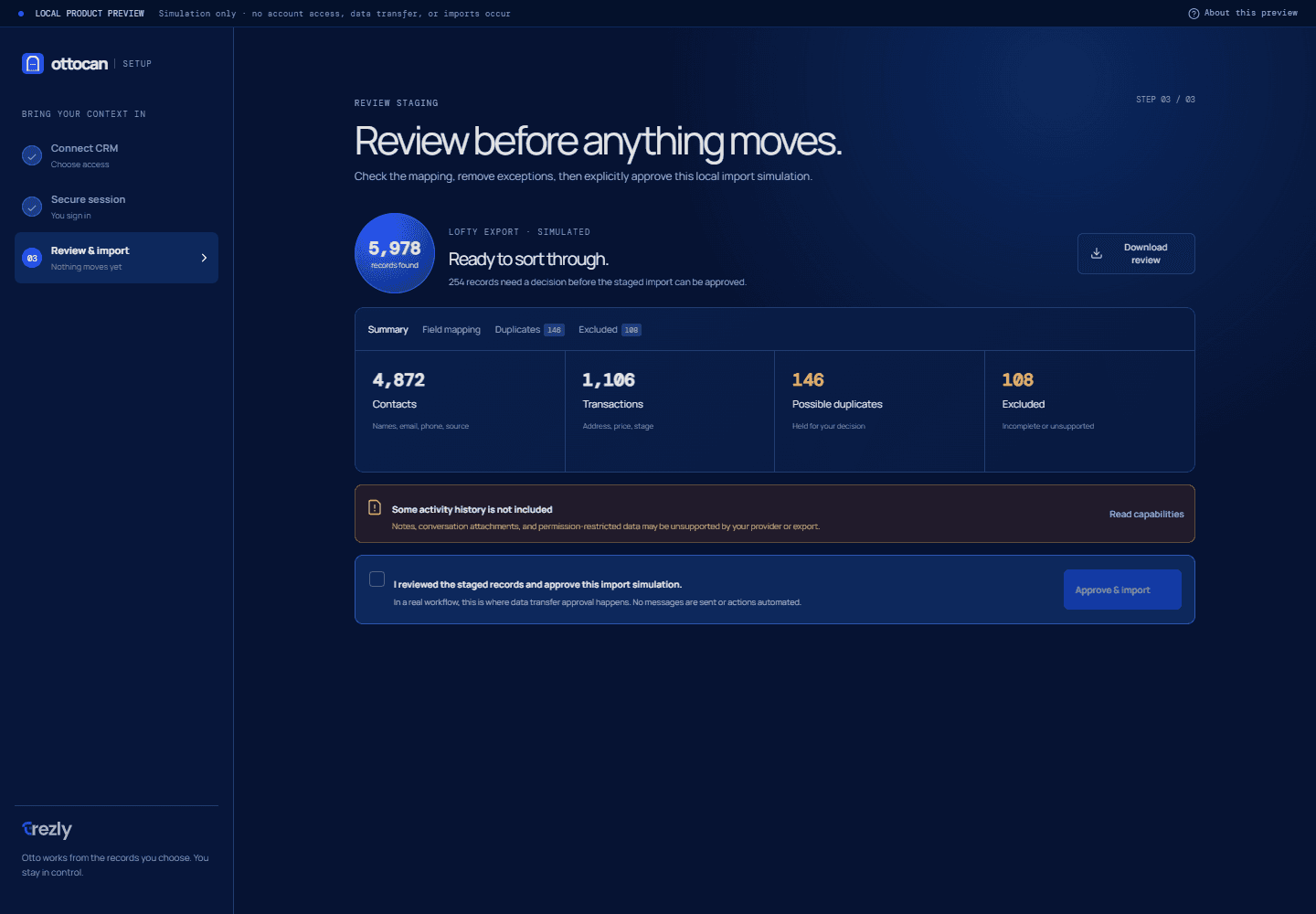
The OttoCan preview expresses part of this philosophy through a review-first import journey. You choose a source, inspect the proposed records, and examine mappings, duplicates, and exclusions before approval. The current screens are a simulated demonstration, not evidence of production access, export, deletion, or security capabilities.
Our north star: your relationships remain yours
The aim is to make agents better supported without making them less independent. This article describes the principles behind that aim; it is not a contractual guarantee or a substitute for the final product policies. Before entrusting any platform with client data, ask for the documented answers—and make sure the controls match the promise.

